
Pro Tips To Improve Your Trailer Fleet’s CSA Score
If you manage a trailer fleet, your CSA score follows you everywhere. It shows up when you’re bidding contracts, applying for operating authority, and getting screened at weigh stations. A high score can subject you to increased inspections, higher insurance premiums, damaged carrier relationships, and a harder road to keeping good drivers. If you’re serious about improving your trailer fleet’s CSA score, read on for some pro tips.
Understand What’s Driving Your Score
Before you can fix anything, you need to know exactly what’s hurting you. The FMCSA’s Safety Measurement System (SMS) tracks violations across seven Behavior Analysis and Safety Improvement Categories, known as BASICs. For trailer fleets specifically, the Vehicle Maintenance BASIC is usually the biggest problem area. It captures roadside inspection violations related to brakes, tires, lights, and other equipment conditions.
Your score within each BASIC is calculated using a time-weighted formula. Recent violations carry more weight than older ones, and violations from the past 24 months all count. That means one bad quarter can spike your score fast, and recovery takes time if you don’t immediately correct the issue and consistently receive better scores.
Pull Your SMS Data and Read It Carefully
Log into the FMCSA’s SMS portal and pull your full data. Don’t just look at the score; look at the underlying violations and see which inspection categories keep showing up. If you’re getting tagged for the same brake adjustment issues across multiple units, that’s a maintenance pattern, not bad luck.
Sort violations by BASIC, by vehicle, and by inspection date. You’re looking for clusters. A single unit racking up violations is a different problem than violations spread across your whole fleet. One tells you a specific trailer needs attention. The other tells you your maintenance process has a gap.
Build a Pre-Trip Inspection Process That Drivers Actually Use
Driver vehicle inspection reports (DVIRs) are only useful if drivers complete them thoroughly and honestly. A checkbox DVIR that gets rubber-stamped at the yard doesn’t catch anything. You want drivers looking at brake connections, tire condition, lights, reflective tape, and coupling devices before every dispatch.
Train drivers on what a real defect looks like. Show them the types of violations that show up on roadside inspections and explain how those violations connect to your fleet’s CSA score. When drivers understand the stakes, they take the process more seriously. Pair that with accountability and make defect reporting a positive behavior, not a punishable one.

Prioritize Brake Systems Above Everything Else
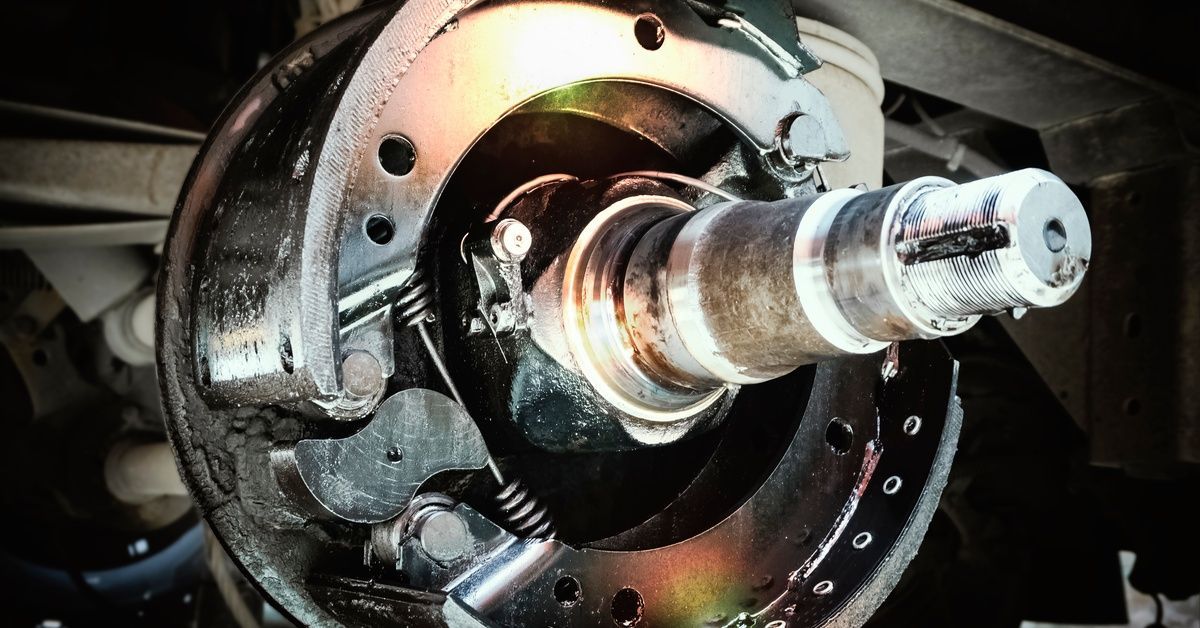
Brake violations are the single most common source of out-of-service orders for trailers. Brake adjustment, brake lining condition, and brake hose integrity show up repeatedly in roadside data across the industry. If your fleet has any weak spots in brake maintenance, inspectors will find them.
Set adjustment intervals tighter than the manufacturer’s minimums, especially for high-cycle trailers. Inspect brake chambers and slack adjusters at every PM cycle. Use automatic slack adjusters, but don’t assume they’re working correctly just because they’re installed.
And remember: Manual verification is still important. A failed automatic adjuster that goes undetected is one of the fastest ways to accumulate points in the Vehicle Maintenance BASIC.
Keep Lighting Systems Road-Ready
Lighting violations are consistently among the top defects cited during roadside inspections. Marker lights, clearance lights, brake lights, and turn signals are all fair game. Inspectors check all of them. Trailers that sit in a yard for days between loads are especially vulnerable to corrosion and connection issues that don’t show up until the unit is out on the road.
Walk every trailer’s lighting system before it leaves the yard. Replace damaged lenses and corroded sockets during PMs instead of waiting for a failure report. If your fleet operates in regions with heavy road salt or moisture exposure, inspect lighting connections more frequently and use dielectric grease to slow corrosion at connectors and plugs.
Manage Tires
Tire violations range from tread depth deficiencies to sidewall damage to improper inflation. Each one is a potential out-of-service defect and a direct hit to your maintenance BASIC score. A single inspection with multiple tire defects on one trailer can do real damage to your numbers.
Implement a tire pressure monitoring process for every unit in rotation. Check tread depth at every PM and flag tires approaching the legal minimum before they get there. Don’t wait for a tire to fail an inspection. Additionally, inspect the sidewalls for cuts, bulges, and impact damage, especially on trailers coming off rough routes. The cost of a proactive tire replacement is always lower than the cost of an out-of-service violation plus the downstream score impact.
Stay On Top of PM Scheduling
Preventive maintenance intervals are the backbone of a violation-free fleet. When trailers fall behind on PMs because of scheduling pressure, dispatch demand, or shop capacity issues, defects accumulate faster than your team can find them. That’s when inspectors find things first.
Use your fleet management system to track PM due dates by mileage and calendar date, and enforce both triggers. Don’t let units go past their service interval just because they look fine. Build your PM schedule around your highest-volume trailers and make sure your shop has the capacity to turn them without creating backlogs. If units are consistently missing PM windows, that’s a resource problem that needs an immediate fix.

Address Violations Fast and Document Everything
If a violation does show up on an inspection report, address it immediately. Don’t wait for the next scheduled PM. Get the unit off the road, fix the defect, and document the repair with photos, work orders, and parts records.
Documentation also matters when it comes to DataQ challenges. If an inspection contains an error, either in the violation code or the vehicle identification, you can file a challenge through the FMCSA’s DataQ system to have it reviewed and potentially removed. Successful challenges reduce your points and improve your score. Fleet managers who review inspection reports carefully and challenge legitimate errors give their fleets a real scoring advantage over those who don’t.
Use Roadside Inspection Data as a Training Tool
Every inspection report your fleet generates is data you can use. When drivers see specific feedback about what was found on their unit during an inspection, it reinforces what to look for during pre-trips and post-trips. Share inspection results with drivers regularly, and don’t frame it as punishment. Frame it as information that helps them do their job better and keeps your fleet compliant.
Build a monthly review into your operations cadence where you go through recent inspection reports with your maintenance team and identify trends. If the same defect type keeps appearing across multiple drivers or units, that’s a training gap or a maintenance gap, and both are fixable.
Keep Your Fleet Moving With Consistent Maintenance
Improving your trailer fleet’s CSA score takes consistent effort, not a one-time push. The fleets that maintain the best numbers are the ones with repeatable systems, trained drivers, and maintenance teams that treat every inspection as a data point rather than a formality. When your trailers are consistently road-ready, your score will reflect that.
If your operation is dealing with deferred repairs or a backlog of units that need attention, getting and staying caught up is important. Partner with Trailer Tech, a reliable provider of fleet trailer repair, to address defects quickly, reduce downtime, and keep your maintenance BASIC moving in the right direction.